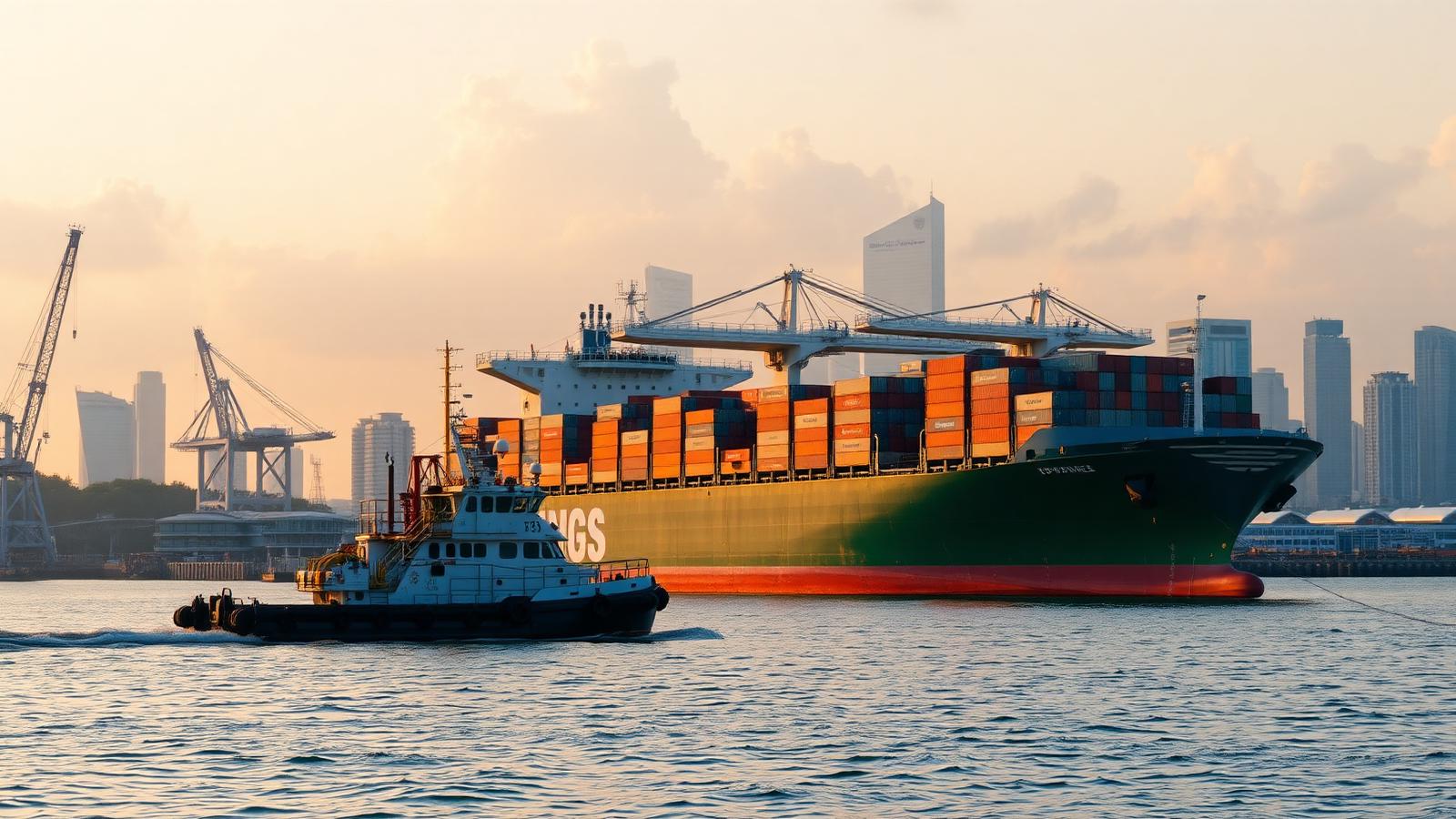
Alkagesta's Singapore unit has reached monthly marine fuel volumes of between 200,000 and 250,000 mt in its first year of operation, Ship & Bunker reported on 1 June 2026, citing an emailed statement from the Malta-based commodity trading and energy logistics group. The entity, Alkagesta Asia Pte, began commercial activity on 1 July 2025.
Alongside bunker supply, the Singapore team traded naphtha cargoes into East and Southeast Asia during the same period, extending the group's physical presence beyond marine fuels into a petrochemical feedstock market that has drawn steady blending and cracker demand across the region.
The operation is led by Agshin Bakirzade, who oversees commodity trading across Asia-Pacific, and Mithat Ciftcioglu, who manages the firm's marine fuel distribution business. "The APAC marine fuels market remains highly attractive, but today success is increasingly driven by supply security, operational reliability, and financial discipline rather than simply chasing volume," Ciftcioglu said in the statement quoted by Ship & Bunker.
Alkagesta said Singapore's standing as the world's largest bunkering hub has been reinforced by disruption to trade flows in the Red Sea and the wider Middle East. Rerouting away from the Suez Canal has lengthened voyages around the Cape of Good Hope and concentrated stem demand at established Asian supply points, where availability and credit terms are more predictable.
Group-wide, Alkagesta reported that trading volumes grew from about 5.2 million mt in 2023 to more than 8.7 million mt in 2025. The Singapore build-out sits alongside the group's Mediterranean marine fuel business and its European aviation fuel and biofuels desks, which have expanded over the same period.
Ukrainian trade title Neftrynok separately reported on 1 June 2026 that Alkagesta had entered the crude oil trading market, while Ship & Energy reported on 29 May 2026 that the company had completed its first crude transaction. Those reports were not accompanied by disclosed cargo volumes or counterparties, and Global Commodity Partners has not independently verified the terms of the trade.
For bunker buyers, the significance of the Singapore ramp-up is less the headline tonnage than the combination behind it: a trading house adding a physical distribution arm in the hub that prices the Asian marine fuel curve, at a moment when supply security has become a purchasing criterion in its own right.


